Grocery Outlet Bargain Market
GROCERY OUTLET HOLDING CORP.Shopping
4.62.58K Reviews
- Version
- 7.2.0 (732)
- Installs
- 500.00K
- Age Rating
- Mature 17+
Screenshots
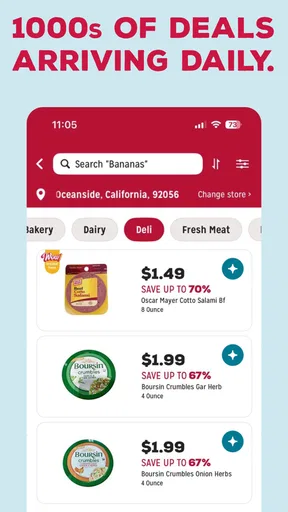
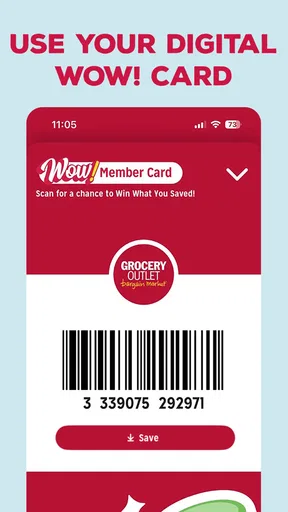
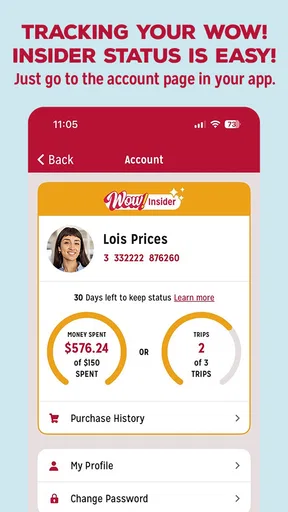
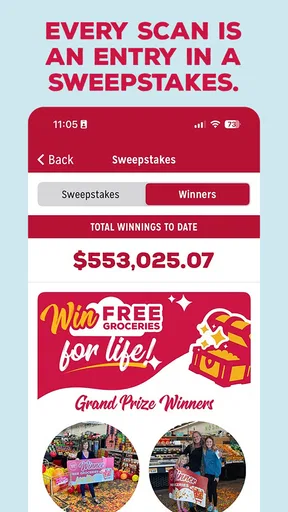
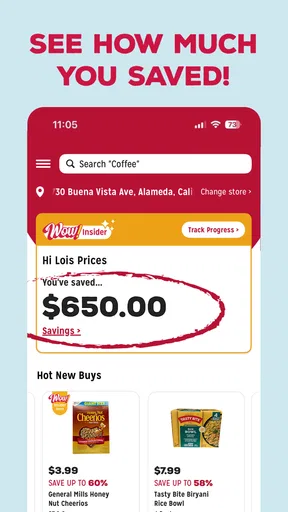
Our Review of Grocery Outlet Bargain Market
 Analysis by Appyee
I tried Grocery Outlet Bargain Market as a shopping companion rather than treating it like a simple store brochure, and my first impression was clear: this is most useful when I already have a flexible grocery plan. The app is built around the idea of finding lower-cost food and household items, not guaranteeing a particular brand or a perfectly predictable weekly basket. That distinction matters. If you enjoy comparing bargains and adjusting meals around what is available, it can become a practical part of your routine. If you need a fixed list of exact products every time, the experience is less convincing.
As a free shopping app from GROCERY OUTLET HOLDING CORP., it focuses on helping shoppers connect with Grocery Outlet rather than replacing the entire grocery trip. Its store positioning centers on savings of roughly forty to seventy percent, while the actual value depends on what is available at the location you use and how willing you are to make substitutions. I would describe it as a bargain-hunting tool first and a conventional grocery-ordering app second.
How the app feels in everyday shopping
The best way to use it is before leaving home. I would open it when planning a weekly trip, look for ideas that fit my budget, and then keep enough flexibility to change brands or even change the meal itself. That workflow suits Grocery Outlet’s unusual strength: the selection can be more discovery-oriented than the carefully standardized inventory found at a traditional supermarket.
For example, imagine I need ingredients for several dinners but do not care whether the pasta, sauce, vegetables, or snacks come from a particular label. I can use the app to get oriented, make a short list, and then treat the store visit as a search for worthwhile substitutions. A premium item at a lower price may replace the product I originally expected, while a temporary bargain may inspire a different dinner. The app works best when the shopper makes decisions around value instead of insisting on one exact shopping script.
That makes it especially appealing to students, families watching their food budget, and anyone comfortable buying pantry items when the opportunity appears. It is also useful for shoppers who like discovering unfamiliar products. On the other hand, people with strict dietary routines, allergy-related requirements, or a very specific brand list should approach it more cautiously. A bargain is not useful if the product cannot meet the household’s needs.
The app’s free price removes an obvious barrier to trying it. It is listed for a mature audience of seventeen and older, which is worth keeping in mind for families deciding who should manage the account or shopping activity. The current release is version 7.2.0, build 732, and it supports devices running Android 7.0 or later. Those details suggest that the app remains accessible to many older Android users, although the experience can still vary depending on the phone and operating system.
What the current release tells me
The current version gives the app a more established feel than a newly launched experiment. Grocery Outlet Bargain Market was released on November 4, 2022, and its presence has grown to more than half a million installs. Its average store rating is 4.6 from about seventeen thousand ratings, with approximately two thousand six hundred written reviews. I do not treat those figures as proof that every shopper will have a smooth experience, but they do show that the app has attracted a substantial audience and that many users find it worthwhile.
What matters more in daily use is whether the app helps me make a better store decision. A high rating cannot tell me whether a particular branch will have the item I want, and a large install base cannot turn changing bargain inventory into a guaranteed catalog. I would therefore use the current release as a planning aid, not as a promise that every product seen or expected will be waiting on the shelf.
The developer, GROCERY OUTLET HOLDING CORP., gives the app a direct connection to the retailer. That is helpful because the experience feels centered on the Grocery Outlet shopping journey instead of being a general-purpose coupon platform. The trade-off is that it is not a universal comparison tool across every supermarket. If my goal is to compare several competing chains in one place, I would still need another method for that part of the decision.
Why the version history matters to existing users
For someone who has used an earlier release, moving to the current build is mainly about staying aligned with the app as the retailer continues to maintain it. I would install the latest version rather than relying on an old copy, especially if the app is being used regularly for store planning. A current release is generally the sensible baseline when checking whether the app behaves properly on a newer phone or Android update.
At the same time, I would not expect a version number alone to transform the shopping model. The central experience remains bargain-focused: browse, plan loosely, and confirm the practical details during the trip. Existing users should judge the update by whether navigation feels dependable on their device and whether it makes their personal routine easier, rather than assuming that a newer build removes every limitation caused by changing store inventory.
One useful habit is to separate app problems from store-availability problems. If a product is not available during the visit, that does not necessarily mean the app failed; bargain retail often depends on what has arrived and sold through locally. Conversely, if the app is slow, confusing, or difficult to use, the shopper may need to adjust the digital workflow even when the store itself has good deals. Keeping those two questions separate prevents unrealistic expectations.
A smarter workflow than simply opening the app at the door
I found that the app makes more sense when used in stages. First, I decide the maximum amount I want to spend and identify the meals or household categories that matter most. Next, I use the app to look for opportunities rather than building an inflexible list. Finally, I keep a short fallback list of acceptable alternatives. This approach protects the budget while leaving room for the store’s changing selection.
A second useful tactic is to divide purchases into “must have” and “nice if found.” Fresh ingredients or items needed for a specific recipe belong in the first group, while snacks, pantry experiments, and backup supplies belong in the second. Grocery Outlet’s bargain-oriented appeal is strongest in that second group. I can take advantage of an unexpectedly good deal without allowing an impulse purchase to derail the entire trip.
A third insight is that the app is better for planning spending than for predicting a complete cart. I would use it to decide how much flexibility I have, then verify the final choices in person. That is a different mindset from using a conventional supermarket app where a familiar product list may be easier to reproduce from week to week. Here, the value comes from adapting intelligently.
Where it beats ordinary grocery alternatives
Compared with visiting a standard supermarket without any digital preparation, this app gives the trip more direction. I can begin with a sense of the retailer’s bargain identity instead of wandering through every aisle hoping to notice something worthwhile. For budget-conscious shoppers, that small amount of preparation can make the visit feel more deliberate.
Compared with a traditional supermarket app built around repeat ordering, Grocery Outlet Bargain Market is less about recreating the same basket and more about finding value among changing choices. That can be refreshing for people who are willing to experiment. It is also a reason not to compare the two apps using the same standard. A predictable weekly grocery order favors a conventional supermarket tool; a flexible bargain hunt favors this one.
Compared with coupon aggregators, the retailer-specific approach may be simpler for someone who already shops at Grocery Outlet. I do not have to begin with a broad search across unrelated stores. The limitation is reach: the app is not the right choice if my main goal is to build a single cross-retailer comparison of every available deal.
Compared with relying only on a paper list, the app adds a useful discovery layer. Still, I would keep the paper-list discipline in some form. Digital browsing can encourage extra purchases, especially when low prices make several optional items seem harmless. The strongest combination is a clear budget, a short list, and enough flexibility to recognize a genuine bargain.
Friction points that should shape your expectations
The biggest limitation is the tension between savings and predictability. A shopper may open the app hoping to plan an exact menu, only to find that the best value depends on what is available at the time of the visit. That is not automatically a flaw, but it can feel inconvenient if I have already committed to a recipe or a particular product.
Another limitation is that the app cannot make personal value judgments for me. A lower price does not answer questions about ingredients, portion size, dietary suitability, or whether I will actually use the item. I still need to read packaging and think about the household’s habits. The app can point me toward a shopping opportunity, but it cannot replace that final judgment.
I also would not use it as my only tool for a time-sensitive trip. If I need a precise set of ingredients for a celebration, a medical diet, or a tightly scheduled meal plan, a retailer with more stable product selection may be a better fit. Grocery Outlet’s appeal is strongest when I can tolerate variation. When certainty matters more than discovery, another grocery option may save me time and frustration.
There is a practical learning curve as well. New users may initially expect a normal supermarket catalog and wonder why bargain shopping requires more interpretation. My advice is to give the app a few trips while tracking which kinds of purchases it genuinely improves. If it helps me lower the cost of flexible pantry items but does little for my fixed essentials, I should use it selectively instead of forcing it to manage the entire shop.
Who should use it, and who should skip it
I would recommend Grocery Outlet Bargain Market to a shopper who enjoys making trade-offs. It is a good match if I can change brands, try unfamiliar products, and plan meals around opportunities. It also makes sense for anyone who wants a free way to prepare for a Grocery Outlet visit without treating the store like a standard, fully predictable supermarket.
I would be more hesitant to recommend it to someone who buys the same branded products every week, needs a guaranteed inventory, or wants a complete online grocery-ordering routine. People managing severe allergies or highly restricted diets should also do their own careful product checks rather than assuming that a low price means the item is suitable.
For families, the app can work well when one person plans the budget and another does the shopping, provided both understand that substitutions are part of the process. A shared list of acceptable alternatives can prevent confusion. Without that agreement, a bargain-focused trip may produce items that looked attractive individually but do not fit the household’s actual meals.
What I would watch in future updates
For future releases, I would pay attention to how well the app supports the balance between discovery and planning. The most valuable improvements would be those that make it easier to distinguish dependable shopping information from short-lived opportunities, without turning the experience into a rigid catalog. Clearer organization would help users decide what deserves an immediate trip and what can wait.
I would also watch how comfortably the current release serves both newcomers and long-time shoppers. A new user needs guidance on the bargain-shopping mindset, while an experienced user wants to reach useful information quickly. The best evolution would respect both groups: simple enough for a first visit, but efficient enough not to slow down someone who already knows how to shop the retailer.
Until then, my recommendation is to use the app with a flexible plan and a firm spending limit. Open it before shopping, identify the categories where substitutions are acceptable, and keep essential purchases separate from optional discoveries. That workflow captures the app’s real strength without expecting it to solve problems it was not designed to solve.
Overall, Grocery Outlet Bargain Market is a worthwhile free shopping app for people who see grocery savings as an active search rather than a fixed weekly formula. Its strong user response, broad Android reach, and retailer-specific focus make it easy to try, but the real test is personal: can I benefit from changing bargains without losing control of my list? If the answer is yes, the app can make Grocery Outlet trips more intentional and potentially less expensive. If I need certainty above all else, I would choose a more predictable grocery alternative and use this one only when I am in the mood to browse.
Verdict
Strengths of Grocery Outlet Bargain Market
- Deep discounts on groceries, snacks, and household essentials
- Treasure-hunt selection with new products appearing regularly
- Many stores offer fresh produce and refrigerated items
- Private-label products can provide strong value for shoppers
- Simple layout makes quick, budget-focused shopping convenient
Limitations of Grocery Outlet Bargain Market
- Inventory changes often, so favorite products may be unavailable
- Selection can vary significantly between individual store locations
- Limited specialty and brand options compared with larger supermarkets
- Fresh-food quality and variety may not be consistent at every store
- The app may offer less functionality than full-service grocery apps
Similar Picks in This Category
View All
SHEIN-Shopping Online
Roadget Business PTE. LTD.4.8

Amazon Shopping
Amazon Mobile LLC4.4


Mercado Libre: Compras online
Mercado Libre4.8

Wish: Shop and Save
Wish US Holdings LLC4.7

Alibaba.com - B2B marketplace
Alibaba Mobile4.4
Frequently Asked Questions
What is the Grocery Outlet Bargain Market app used for?
The Grocery Outlet Bargain Market app is designed to help shoppers discover savings, find nearby stores, and stay informed about special offers and new products. Because Grocery Outlet’s inventory changes frequently, the app can be useful for planning a flexible shopping trip rather than building a strict list around permanent products. Availability and features may vary by location.
Can I use the app to check product availability or prices at my local store?
The app may provide store information, promotions, and other shopping details, but Grocery Outlet inventory is not always consistent from one location to another. Products are often purchased at opportunistic discounts, so an item shown in a promotion may sell out quickly or may not be available at every store. It is best to confirm details locally before making a special trip.
Does Grocery Outlet Bargain Market offer online grocery ordering or delivery?
Online ordering and delivery options can depend on your location and on services available through individual stores or third-party providers. The app should not automatically be treated as a complete online supermarket with guaranteed delivery everywhere. Before downloading, check whether your nearest Grocery Outlet supports the specific ordering, pickup, or delivery features you want to use.
Is the Grocery Outlet Bargain Market app free to download?
The Grocery Outlet Bargain Market app is generally available to download without an upfront purchase price, although mobile data charges may apply when using it away from Wi-Fi. Some features can also rely on external services, store participation, or location permissions. Review the app-store listing and privacy information for the latest details about supported devices, permissions, and optional services.
Does the app require location access, and is it safe to use?
Location access may be requested to help identify nearby Grocery Outlet stores and display relevant store information. You can usually manage this permission through your Android or iOS settings, and the app may still offer limited functionality without constant location access. As with any shopping app, review its privacy policy and only provide permissions that are necessary for the features you plan to use.
